
Vishwanath's Oils Laboratory
Vishwanath’s Oils Laboratory is a state-of-the-art facility dedicated to the extraction, research, and refinement of premium-quality essential oils. Equipped with advanced distillation and testing systems, the laboratory ensures every oil meets the highest standards of purity, potency, and consistency.
Gas Chromatography
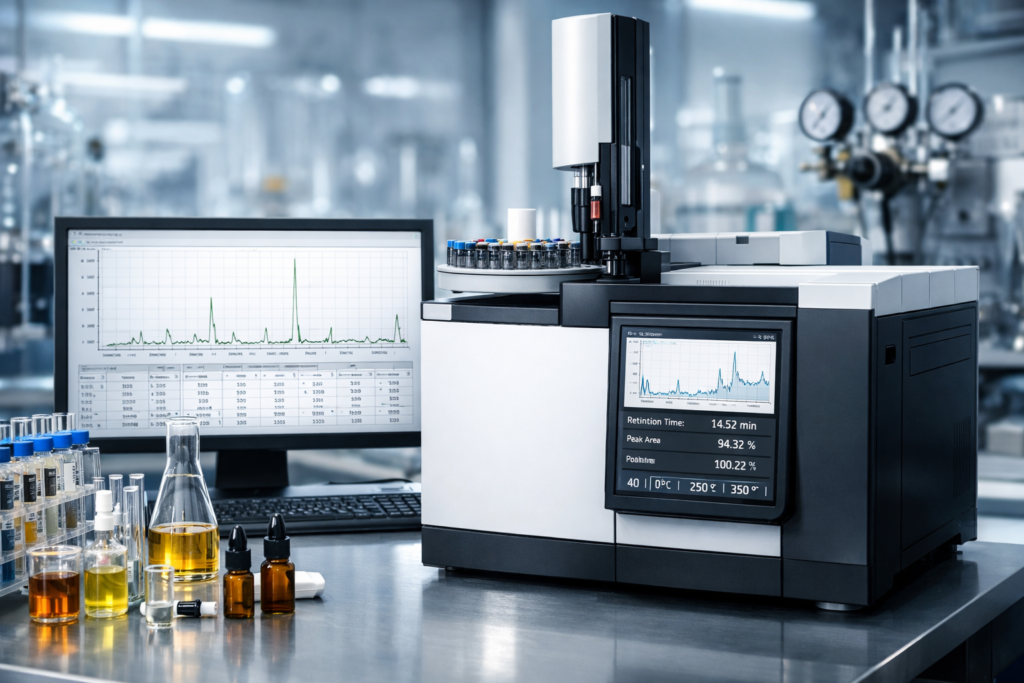
Gas Chromatography (GC) is an advanced analytical technique used to separate and analyze volatile compounds in a sample with high precision. In this process, the sample is vaporized and carried by an inert gas through a specialized column, where individual components separate based on their chemical properties. Each compound is then detected and displayed as peaks on a chromatogram, allowing accurate identification and measurement.
In essential oil laboratories, Gas Chromatography plays a crucial role in ensuring purity, consistency, and authenticity. It helps identify key aromatic compounds, detect adulteration, and maintain strict quality standards. This makes GC an essential tool for delivering high-quality, safe, and reliable natural products.
Gas Chromatography Mass Spectrometry
Gas Chromatography–Mass Spectrometry (GC–MS) is a powerful analytical technique that combines the separation capabilities of Gas Chromatography with the identification strength of Mass Spectrometry. In this process, a sample is first vaporized and separated into individual components through a chromatographic column. As each compound exits the column, it enters the mass spectrometer, where it is broken into ions and analyzed based on its molecular structure, creating a unique “mass fingerprint” for precise identification.
In essential oil laboratories, GC–MS is essential for detailed chemical profiling, ensuring purity, authenticity, and safety. It accurately identifies even trace-level compounds, detects adulteration, and verifies the presence of key active constituents. This advanced technology enables manufacturers to maintain premium quality standards and deliver consistent, reliable, and scientifically validated natural products.
MSDS
A Material Safety Data Sheet (MSDS) is a comprehensive document that provides detailed information about the properties, hazards, handling, storage, and safety measures related to a chemical substance or product. It is an essential component in laboratories and manufacturing facilities, ensuring that users understand the risks associated with materials and how to work with them safely and responsibly.
The MSDS includes key sections such as identification of the substance, hazard classification, composition, first-aid measures, fire-fighting instructions, accidental release procedures, handling and storage guidelines, exposure controls, and disposal considerations. In essential oil and chemical laboratories, MSDS documents play a crucial role in maintaining workplace safety, regulatory compliance, and protecting both personnel and the environment.
Certificate of Analysis
A Certificate of Analysis (COA) is an official quality assurance document that verifies a product meets specified standards and requirements. It provides detailed test results for a particular batch, confirming its identity, purity, composition, and overall quality. Each COA is issued after thorough laboratory analysis and is essential for ensuring transparency and consistency.
In essential oil and chemical industries, a COA typically includes parameters such as appearance, odor, specific gravity, refractive index, purity levels, and chromatographic data (GC/GC-MS results). It also contains batch number, manufacturing date, and testing methods used. This document assures customers and regulatory bodies that the product is safe, authentic, and meets industry standards.
Optical Rotation
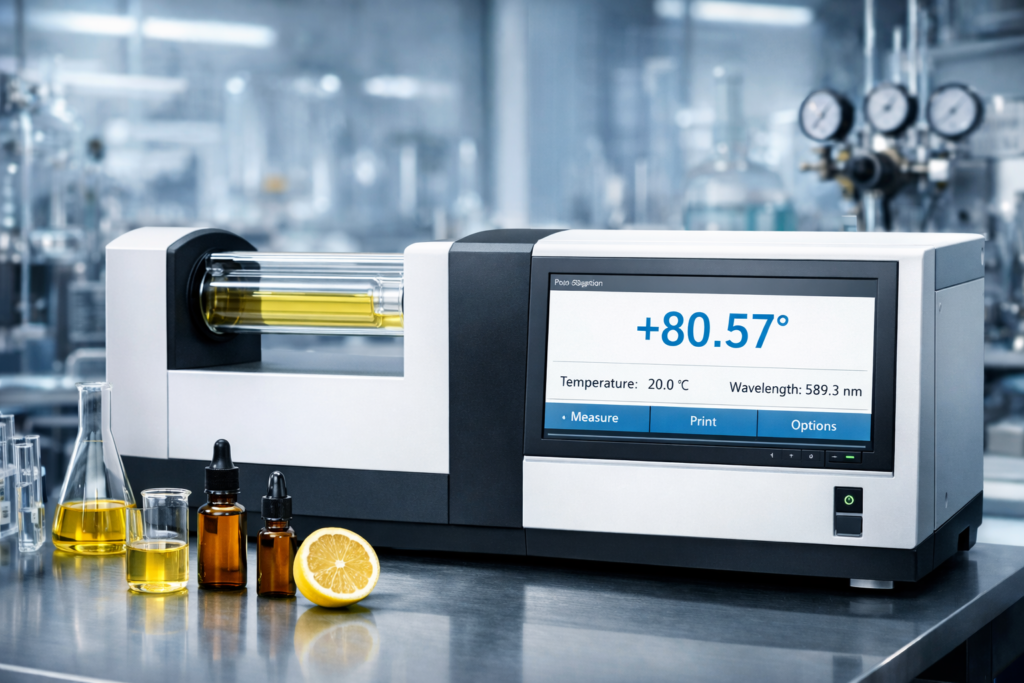
Optical Rotation is a measurement used to determine how a substance rotates the plane of polarized light. Certain natural compounds, especially those found in essential oils, are optically active, meaning they can rotate light either to the right (dextrorotatory, +) or to the left (levorotatory, −). This property is measured using a polarimeter and is expressed in degrees.
In essential oil analysis, optical rotation is an important parameter for verifying purity, authenticity, and quality. Each oil has a characteristic optical rotation range, and any deviation may indicate adulteration or variation in composition. It serves as a reliable quality control tool, helping ensure consistency and maintaining industry standards for natural products.
Specific Gravity
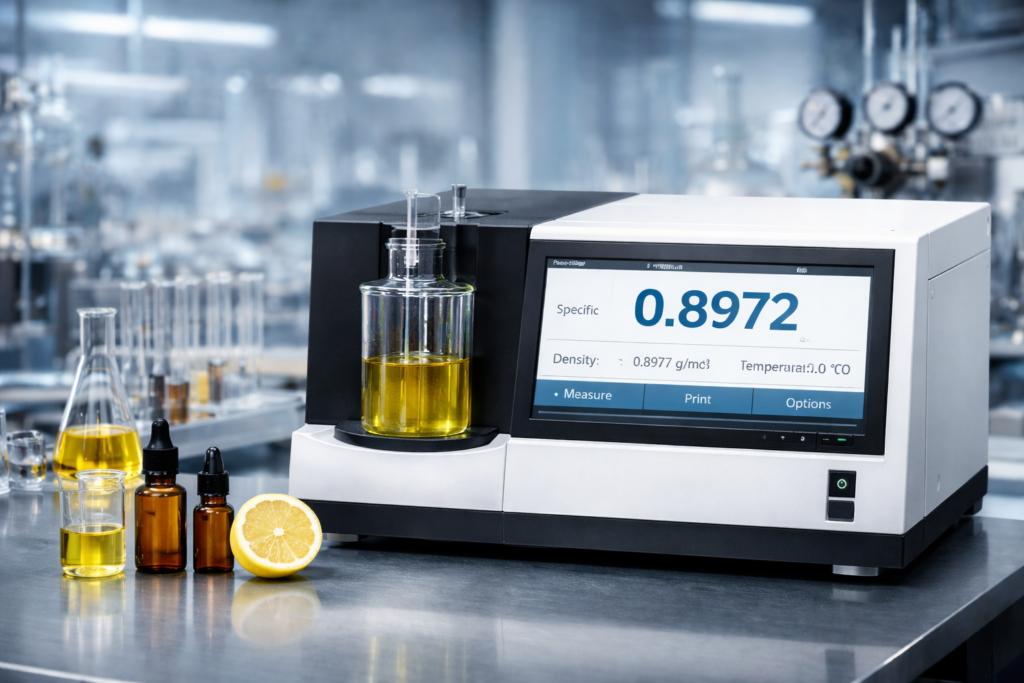
Specific Gravity is a key physical parameter used to measure the density of a substance in comparison to water at a specified temperature. It indicates how heavy or light a liquid is relative to water, which has a standard value of 1. Essential oils typically have specific gravity values less than or greater than 1, depending on their composition.
In essential oil analysis, specific gravity is an important quality control factor used to verify purity, consistency, and authenticity. Each oil has a defined specific gravity range, and any variation may indicate adulteration or improper processing. This measurement is commonly determined using instruments like hydrometers or digital density meters, ensuring accurate and reliable results for maintaining industry standards.